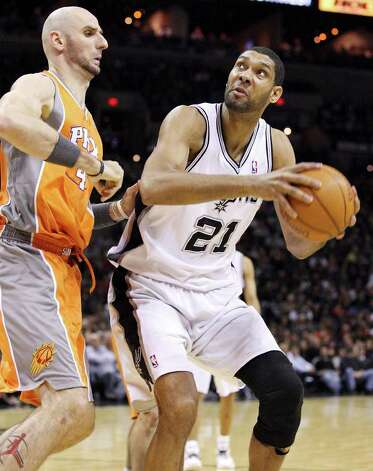
Showing posts with label NBA. Show all posts

Sunday, June 10, 2012

LeBron James Gave Us A Throwback


LeBron James and Shaquille O'Neal are two of the most physically gifted individuals in NBA history. They are bigger and faster and stronger than everybody else in NBA history at their respective positions.

They make it look easy, even though it's not. James finished an Eastern Conference Finals where he averaged 33.6 points, 11 rebounds, and 3.9 assists while shooting 58.7 percent True Shooting against the best defense in the NBA. And he did that while banging with Kevin Garnett on switches, slowing down Paul Pierce in isolation, and helping on the unpredictable Rajon Rondo.
The series against Boston is reminiscent of another great seven-game Conference Finals from 10 years before: the Los Angeles Lakers vs. the Sacramento Kings. It was arguably Shaq's greatest moment.

Dealing with numerous minor injuries and with his team down 3-2 to Sacramento, Shaq delivered menacing dunks, an alpha attitude and- yeah, check this out- excellent free throw shooting. He told the team to give the ball to him and let him set the tone for game six, and he did just that. Overall, he averaged 38 points, 15 rebounds and 3 blocks per game while hitting 75 percent of his free throws in the two victories.

Return to 2012. Dealing with enormous pressure and with his team down 3-2 to Boston, James delivered confident dagger jump shots, an alpha attitude, and big-man rebounding. He set the tone with a legendary game six performance. Overall, he averaged 38 points, 13.5 rebounds, and 3.5 assists while shooting 59.5 percent from the field in the two victories.

They're both out-of-normal-NBA-court-dimensions stars, but dealing with adversity took more than being a physical specimen; it took brains and heart. James understood that to beat Boston, his team needed Shaq-like aggression from him. If he had failed, so be it, but at least he would have went down trying.

Shaq went on to win his third straight Finals MVP in 2002; perhaps LeBron wins his first this year. OKC is a powerful team, but a King-Mode LeBron- like a Superman-Mode Shaq- can overcome anything.

Friday, April 27, 2012

Western Conference First Round Playoff Preview

Here is a preview of the first round of the Western Conference playoffs.

San Antonio Spurs (1) vs. Utah Jazz (8)


Utah has youth, size, and dominant offensive rebounding (second in the league); it's easy to think Spurs vs. Grizzlies 2011 all over again. However, there are major differences this year: Utah is a below average defensive team (19th in the league), and the Spurs have a healthy Manu Ginobili.

One more time?
Al Jefferson, Paul Millsap, Enes Kanter, and Derrick Favors will cause problems for the Spurs, but Jefferson is easier for Tim Duncan to guard than Zach Randolph. Jefferson is the best scoring option on the team, like Randolph was for Memphis, but Duncan was relegated to guarding a less important Marc Gasol last year because of Randolph's unrelenting face-up game. TD can handle Jefferson's low-post game.

As tempting as it is to make the call for an upset again, it isn't happening this year. Utah won't be able to slow down San Antonio's offense.

Pick: San Antonio Spurs


Oklahoma City Thunder (2) vs. Dallas Mavericks (7)


Dirk and KD are elite offensive players.
In last year's Western Conference Finals, the Mavericks beat the Thunder in five games because the lineup of Dirk Nowitzki, Tyson Chandler, Shawn Marion, Jason Kidd, and Jason Terry meshed as perfectly as a five-man unit realistically could. Chandler is out of the equation now, and his supposed replacement, Lamar Odom, isn't going to play for Dallas anymore. Chandler occupied Kendrick Perkins, Serge Ibaka, and Nick Collison last season, which allowed Dallas's perimeter threats to go off. Now, those bigs can help when Dirk or Jet drive.

The Maverick offense, normally a staple in the top 10, was ranked 22nd this year. Without an ultra-efficient offense, Dallas's defense, though supposedly improved from last season, will surrender too many fast-break points to the young Thunder. Kevin Durant, Russell Westbrook, and James Harden should be able to feast on Nowitzki's and Brendan Haywood's pick-n-roll defense.

Pick: Oklahoma City Thunder


Los Angeles Lakers (3) vs. Denver Nuggets (6)

Sessions needs to perform well.
If it weren't for Ramon Sessions, this would be a sure upset for Denver. Ty Lawson would have torched L.A.'s pick-n-roll defense while Arron Afflalo would have shadowed an overworked Kobe Bryant enough to win. Andrew Bynum and Pau Gasol wouldn't see the ball with Kobe gunning and Derek Fisher flopping.

Sessions changes the game. His ability to deliver the ball to the All-NBA-caliber 7-footers allows L.A. to dominate the inside matchup, which means less fast-breaking for the deep, energetic Nuggets. Denver doesn't have a single big man than can contend with Bynum or Gasol, and that's a damning matchup disadvantage.

Pick: Los Angeles Lakers


Memphis Grizzlies (4) vs. Los Angeles Clippers (5)


This is the most difficult matchup to assess because of injury variables. Is Zach Randolph back to form? Is Chris Paul's hamstring going to limit him?

CP3 's health is the most important variable in the series.
Randolph and Gasol vs. Blake Griffin and DeAndre Jordan is the frontcourt matchup of the first round; the teams are incredibly close when it comes to rebounding on both sides of the floor. The Clippers struggle stopping teams, but the Grizz are a below-average offensive team. Memphis led the league in causing turnovers (.163 TOV% for opponents), and Gasol can defend interior scorers.

But L.A.'s number four-ranked offense doesn't turn the ball over (.127 TOV%) thanks to CP3 (2.1 turnovers per game), and they don't rely on a post scorer. Instead, the Clippers attack with the Paul/Griffin pick-n-roll. If Paul is healthy, Memphis will have a hard time stopping the Clippers.

Pick: Los Angeles Clippers


Eastern Conference First Round Playoff Preview

It's playoff time in the NBA, a time for the team to shine. Regular season success matter little; it's all about matchups now. It's all about how one team matches up against another. It's "five as one" vs. "five as one", a social experiment of sorts; how does one team co-mingle with another?

Here is NBA Wired's preview of the first round of the Eastern Conference playoffs.

Chicago Bulls (1) vs. Philadelphia 76ers (8)


Rose will see plenty of Iggy in the first round.
Andre Iguodala and Jrue Holiday anchor perhaps the best perimeter defense in the league, a strength which on paper appears perfect for slowing Derrick Rose and the Bulls. Chicago specializes in shutting down superstar-centric offenses, but that doesn't matter against Philly's multi-polar offense. This series is ripe for an upset, right?

Well, it could have been if the Sixers weren't trending downward as the season progressed. Philly blazed through the first part of the season before struggling down the stretch en route to the eighth seed, whereas Chicago adapted to the absence of Rose. Chicago is going to win the possession battle: they take care of the ball better than Philly forces turnovers, and their dominant offensive rebounding corps will provide extra shots against a team without a singularly dominant defensive rebounder.

A major advantage for Chicago is their defensive depth. Philly's Louis Williams and Thaddeus Young anchor a potent scoring bench, but they'll be running into Omer Asik and Taj Gibson, who anchor arguably the best bench defense in the league.


Pick: Chicago Bulls


Miami Heat (2) vs. New York Knicks (7)


This is the most exciting matchup in the conference. The last time these two teams hooked up in the first round of the playoffs after a lockout was 1999, when Allan Houston got his $100 million shot to go down.

Talk about a marketable matchup...
These Knicks are a wildly different team than at season's start thanks to Mike Woodson's emphasis on defense. Tyson Chandler is possibly the purest anti-Heat weapon in the league, a center who can take advantage of Miami's small frontcourt with his length and movement. New York's explosive bench can push the pace against Miami's slower bench players. Iman Shumpert's defense against Dwyane Wade and LeBron James will be integral. On the other side, how will Miami defend Carmelo Anthony, who has been surging since the All-Star break and is out to prove himself against his 2003 draftmates?

In the end, Miami is going to have the two biggest matchup advantages on the court for 40 minutes per game. James and Wade are the two best players in the series and are on a mission to avenge last year's NBA Finals loss.

This series will go a minimum of six games.


Pick: Miami Heat


Indian Pacers (3) vs. Orlando Magic (6)


Should have just put Milwaukee in the sixth spot.

The Dwight Howard-less Orlando Magic have no chance against arguably the deepest team in the conference. Danny Granger's play improved throughout the season; post-All-Star Break, he averaged 19.4 points per game on 45 percent shooting, 41.3 percent from 3, and 90.8 percent from the free throw line. Granger and Paul George should be able to bother Orlando's 3-point shooters, who don't have Howard opening the floor for them.


Pick: Indiana Pacers

Boston Celtics (4) vs. Atlanta Hawks (5)


Jeff Teague needs to prevent Rajon Rondo's penetration.
This is going to be a tight series. Boston is the better team, but Atlanta has home-court advantage, a rebounding advantage, and an improved Josh Smith. J-Smoove nearly put up a 20/10/4 season this year and carried Atlanta's frontcourt after Al Horford sustained an injury.

Jeff Teague vs. Rajon Rondo is the premier matchup to watch; if Teague can cause havoc and open up jumpers for Atlanta's shooters, they have a chance. But that's a tough task with Kevin Garnet manning the middle. With KG's move to C and Horford's absence, he'll be free to guard Zaza Pachulia and Ivan Johnson, meaning he can roam and help out on Smith and Teague. Avery Bradley's development as a defensive stopper will prove handy against Joe Johnson.

Atlanta doesn't have the offense to score against the best defense in the league; Boston still has Paul Pierce for isolation scoring when a drought occurs.


Pick: Boston Celtics


Friday, April 20, 2012

The Resurrection of Chris Paul

Four seasons ago, Chris Paul finished second in MVP voting. He was coming off a historic regular season, and he followed that historic season with a magical- well, Magic-like, actually- playoffs. Not since Earvin Johnson himself had a point guard combined such flawless playmaking with the ability to volume score on ridiculous efficiency. Smaller package, but similar results.

Yeah Steve, he passed right by you.
However, CP3 has been overlooked ever since those 2008 playoffs. The season after was marred by injury, and the New Orleans Hornets weren't the same thereafter. Furthermore, several other perimeter superstars either emerged or had their situations radically shifted for the better. LeBron James and Dwyane Wade hooked up in South Beach. Kobe Bryant received two more rings. Derrick Rose and Russell Westbrook brought uber-athletic ability to Paul's position while still remaining smart enough to handle an NBA offense.

And Chris was put on the back burner, a player in basketball exile waiting to be moved, waiting to have his "Decision" summer.

Thankfully it came early when he was traded to L.A. And then it didn't when the trade was rescinded. And then it did again, to a different team in the City of Angels.

And thus, the public perception of Paul has ascended once again to acceptable levels. He still probably doesn't get the respect he deserves, but at least people are recognizing him again. Paul should be on the All-NBA First Team this year along with Westbrook (Wade and Rose have all missed more time), and he should be in the running for MVP as well. He is the best player on a high-level team, and he has assumed a large load on that team, especially since the season-ending injury to veteran Chauncey Billups.

Paul is leading the third-best offense in the NBA and orchestrates "Lob City" as the true mayor in town. Blake Griffin may get the highlights, but it's usually Paul setting him up for those dunks. Paul is averaging 19.4 points and nine assists (with just 2.1 turnovers!) per game while shooting 48.1 percent and 37.3 percent from 3-point range. His ability to handle the ball as much as he does, create the amount of offense he does, and play over 36 minutes per game while only turning the ball over 2.1 times is mind boggling.

When it's crunch time, Paul seemingly always recognizes the situation and takes the game by the throat. According to 82games.com, Paul has the fifth-highest scoring average under its definition of a "clutch situation." He's also tenth in assists and ninth in FTAs while shooting a staggering 95 percent from the charity stripe in "clutch situations."

Perhaps more importantly, he's taught Griffin how to flop at an ALL-NBA level. It's not in the scope of this article to make fish jokes about Clippers and flopping, so do that on your own time.

But Paul is back and on a relevant team with weapons, and if history is any indication, he's going to go bonkers in the playoffs. He's arguably the second-best player in the league, and he's on a mission to prove it to NBA fans.

Saturday, April 7, 2012

Old Reliable: Tim Duncan

Kevin Garnett isn't the only oldie with game.

Tim Duncan and KG ruled an era together, and while we were robbed of seeing the two face off with even supporting casts in an epic playoff series- thank you, Minnesota management- at least we get to see them age together, and gracefully at that.

Tim is one of the 10 greatest players in NBA history.
Duncan's Spurs have the second-best record in the tough Western Conference thanks in part to Tony Parker's MVP-contender season, league-best depth, and Duncan's ability to be a presence inside. Timmy is the second-leading scorer on the team at 15 points per game, and while he isn't the post scorer he once was, he has gradually shifted into a role that resembles present Garnett: a stretch big man. Duncan could always hit the occasional jumper to keep defenders honest- his bank shot is an all-time classic- but he's evolved into a center who is the recipient of his slashing wings setting him up for shots.

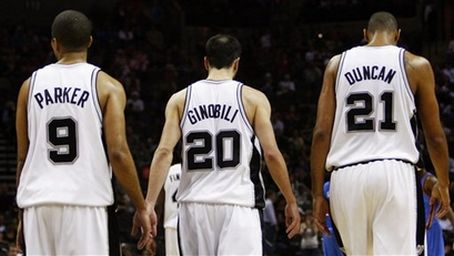
According to HoopData.com, TD is taking 4.4 shots per game in the 16-23 feet range and making them at a 45 percent clip, both personal bests since morphing into an offensive role player. This change affects San Antonio in two ways: it allows Duncan to be an offensive threat without S.A.'s wing players needing to throw risky post-entry passes, and it spreads the floor for Parker, Manu Ginobili, and Gary Neal. These effects have contributed to the Spurs' ability to take care of the ball (second-best in the NBA at Turnover Percentage) and make shots (best in the NBA at eFG Percentage).

On the other side of the ball, Duncan's presence is still felt. He can't control the paint or block shots like he used to, and his pick-n-roll defense has reached Shaq-levels, but he can defend big centers and boasts the second-best defensive rebound percentage in the league (28.9 percent). As a result, the Spurs are the best in the league at cleaning the defensive glass.

If the Spurs have any shot at coming out of the West- I think they're a clear underdog against a few teams- they'll need a Big Fundamental throwback. They'll need Duncan to contend with Andrew Bynum/Pau Gasol and Marc Gasol/Zach Randolph and make those frontcourts play both sides of the ball.

After 15 years of watching Timmy D, we probably don't have much time left with him. Post-All-Star break, he's giving us nearly 17 points, 10 rebounds, and a glimpse into the past every game. Enjoy it while it lasts.

Friday, April 6, 2012

Dwight Howard's Hilariously Awkward Folly

Move over LeBron James- Dwight Howard is the new king of bad PR.

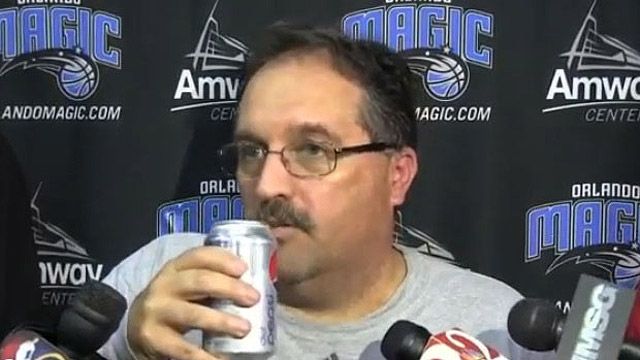
Taste Test: Lex Luthor used Coca-Cola. He failed.
Orlando's center- the same guy who tugged on the heartstrings of Magic fans up to the March trade deadline- created a classic scene when he abruptly walked into an interview session with Stan Van Gundy after SVG said that his superstar was lobbying for his removal from the coaching position. Superman proceeded to hug his coach and ask if the rogue journalist who reported on Howard's sabotage plan was present.

He was all smiles and was as confident as Van Gundy- that is, until Van Gundy left him on stage. What followed was an awkward mix of "I don't know" baby faces and backtracking that should give Howard the confidence he needs to pursue a career in politics after he retires.

What did we learn?

  • Stan Van Gundy should do Pepsi commercials. Seriously, the man spoke so candidly with reporters, and when his tormenter entered the fray- a good four feet taller than Stan, by the way- he stood his ground with a nonchalant smile before setting Howard up for a media session that nearly put "The Decision" to shame.
  • Howard is a malcontent who needs new PR people. He probably needs better people around him period. Michael Jordan's former agent, David Falk, recently said in an interview with Sports Illustrated that in today's digital age, players don't need to go to big markets to be marketable. Apparently, Howard doesn't get that.
  • The Orlando Magic franchise continues to crash and burn. Say SVG is done: what good coaches are willing to work under management so weak that it caves to a superstar's every demand? What good coaches and free agents want to work under management that can't even keep situations like this in-house? It's quite sad, because Orlando has a strong fan base in a great city. And they have some good, hard-working players like Jameer Nelson and J.J. Redick, too.
At this point, Orlando fans are clamoring for simpler times, when an incredibly overpriced contract for Rashard Lewis, an ill-advised trade for Gilbert Arenas, and a multitude of other poor moves by the team's inept GM, Otis Smith, were the only problems that existed for the franchise.

Simpler times they were indeed.

Wednesday, March 28, 2012

Russell Westbrook and Creating "Luck"

Russell Westbrook is an apex predator. Give him a straight line to the basket- even the slightest slit through a defense- and the alpha athlete of the NBA will lock in on the rim and ferociously attack, concluding his assault with a thunderous dunk.

That's the instinctual, aggressive side of Westbrook.
With RW, it's not just the dunks anymore.

But there's another, more controlled side of the point guard's game that has been in the works for quite a while now. Slowly but surely, Westbrook has been developing habits such as recognizing when his teammates are in rhythm, taking a patient approach to getting good shots for himself, and setting up the offense without the intent of gaining a stat (field goal, free throws, or an assist) for himself to conclude the possession. He took a statistical quantum leap in his third year but is taking an incremental yet no less important leap this year as far as providing what his team needs.

Kevin Durant is the Thunder's Constant, the consistent provider of efficiently scored points. Although Durant himself has made leaps as far as creating shots for himself, he isn't a primary creator. As a perimeter scorer, he belongs in the score-in-the-flow category, though again, he has made improvements.

Westbrook can be the wild card, the push-us-over-the-top creator of variance and "luck," the player whom the opposition plans for yet realizes that surrendering an explosive offensive performance isn't always in their control. He's always had a game tailor-made for being that type of player. It's an advantage of behaving with a "survival of the fittest, only the strong dunk" attitude.

But as great as Westbrook was last year, he had the propensity to shoot his team out of games as much as he had the ability to shoot them over the top. That's not creating "luck." That's gambling, and when a team already has a player as consistent as Durant, it's unnecessary.

What the Thunder need is what this calmer Westbrook has become. RW has upped his scoring volume this season from 21.9 to 24.2 points per game, all the while scoring more efficiently than ever before (55.2 percent True Shooting). His assists have dropped from 8.2 to 5.5 per game, but that's more a function of issuing the ball to James Harden and Durant to accommodate their respective ball-handling and improved iso scoring capabilities. He has improved his ability to play off of others.

And that's why defenses are having a much harder time corralling him. Westbrook is shooting at career-high percentages from 3-9 feet, 10-15 feet, and 16-23 feet, all the while shooting the same or a greater volume from those spots on the floor compared to 2011. Perhaps most importantly, he's developed a potent 3-point shot. He's assisted on 45.8 percent of his 3's, but he has also more than doubled his volume of total attempts, meaning he's even more of a threat off the dribble from deep.

Oklahoma City is ranked first in the NBA in offensive rating this year, and Westbrook's change in behavior is a contributing factor in the team's offensive improvement. He's using his creative ability and energy not to gamble but to take responsible risks at appropriate times in games. It's a much more useful approach, especially come playoff time when he can create that "luck," that variance when necessary, and push his team over the top.

Thursday, March 8, 2012

New Jersey Nets: Injuries Cost the Front Line

The New Jersey Nets are a fortunate bunch.

They are currently 13-27, good for last in the Atlantic Division.  They have the worst defense in the entire league.  And they lead the league in total games missed: 11 players have missed 123 games as of this past Tuesday, and that number is sure to grow with Brook Lopez still out with another leg injury.    

Deron Williams has played like a top-7 player in the NBA this season.
But at least they aren't the Bobcats.  

At the core of N.J.'s problems is that Lopez has accounted for a large portion of those games missed.  Brook has played only 136 minutes over five games for a team that doesn't have another legitimate NBA starter in their frontcourt.  Without Lopez's interior scoring, the team relies almost exclusively on Deron Williams to create shots.  It's a credit to Williams that with all that pressure and with head coach Avery Johnson misusing him early in the season by putting him off-ball, he has still been able to elevate New Jersey to literally being at the league average in offensive rating.  

MarShon Brooks, who has had a stellar rookie season, has also missed time.  Brooks can handle the rock and act as a pressure-release for Deron, so having him in the lineup and healthy has been crucial.

The perimeter corps of New Jersey measures up quite nicely against most teams in the league: Deron is a superstar point guard, DeShawn Stevenson and Anthony Morrow provide toughness, length, and shooting at the wings, Jordan Farmar is a proven championship-caliber backup PG, and Brooks is a solid all-around rookie.  

But the frontcourt...oh, the frontcourt.  Kris Humphries is the team's frontcourt scorer, and he derives most of his points from Deron Williams.  Shelden Williams and Johan Petro are non-threats at center, and the frontcourt lacks the length and/or quick feet that it takes to defend the high-percentage spots of the floor.  The team is close to last in the league in blocks, eFG% Against, and defensive rebound percentage.  

Maybe their frontcourt fortunes change.  Maybe they sign Dwight Howard this summer and all is well.  If they do, they'll be contenders.  But for now...they're simply not the Bobcats.    

Sunday, February 19, 2012

Tyson Chandler's Big Apple Impact

Jeremy Lin deserves the headlines he has garnered.  He has spearheaded the current New York run and put them back in the playoff picture, right as head coach Mike D'Antoni was on the cusp of unemployment.

But another pre-season Knick acquisition- one initially publicized more but has since been overshadowed since Linsanity took hold- is Tyson Chandler.  Chandler was supposed to come in and give the Knicks a defensive backbone, completing the Chandler-Amar'e Stoudemire- Carmelo Anthony trio.    

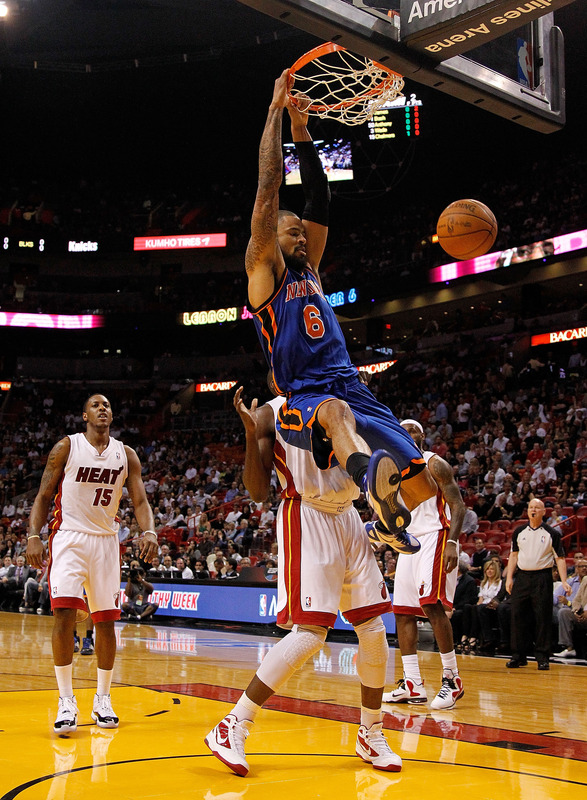
Chandler's ability to catch and finish is nearly unmatched.  
Amidst the many surprises N.Y. has encountered this season, Chandler has been a welcomed constant.  The straight-out-of-high school veteran center has seemed to click with the Ivy League youngster on both ends, rolling to the hoop for alley-oops on one end and having Lin's back after a blow-by on the other.  By the eye-test, they seem to communicate well.  

The Knicks are currently sixth in the NBA in defensive rating.  The last time New York finished a season in the top ten in defensive rating was back in 2001, when coach Jeff Van Gundy, ever-mean mugging Kurt Thomas, and young Marcus Camby were leading the defensive charge.  

Chandler has no doubt been a huge part of N.Y.'s defensive resurgence.  Never a prolific shot-blocker, Chandler's shot-changing help defense is his greatest asset.  It's important to note that actually blocking shots is overrated; it's better to block 1.4 shots per game and change a bunch of interior shot attempts (that's Chandler) than block three shot attempts and play bad help defense the other 92 possessions per game.  

Chandler's also rebounding the ball well with a 22.6 defensive rebound rate.  That's important since New York doesn't have any other great interior-oriented rebounders.  New York is the third-best defensive rebounding team in the league (it surprised the hell out of me, too).

Credit should also go to Jared Jeffries and defensive coach Mike Woodson, but Chandler is usually the last line of the defense.    

And Chandler remains the prototype for this era's role-playing offensive player at center.  Despite not playing with a playmaking PG until two weeks and having poor spacing as a result of team-wide shooting woes and zero ball movement, Chandler is averaging 11.7 points per game on a league-leading 73.6 percent True Shooting.  His individual offensive rating is a league-leading 136- basically, when he gets the ball, he doesn't make mistakes.  Insanity- no L. 

Something that worries me is that he's playing a lot of minutes- a lot more than last year.  He played less than 28 minutes per game last year; this year, he's up around 34.  That's a testament to his judiciousness with personal fouls, but D'Antoni would be wise to give him more breathers.  Chandler has been prone to injuries in the past. 

Chandler's two-way play and ability to play like a superstar role-player has proven constant through in-season turnover and turmoil for N.Y.  The right Baby Bull seems to be yielding great results thus far.     

Friday, October 7, 2011

Ricky Rubio: Becoming Rick Adelman's Alpha-T'Wolf

The Minnesota Timberwolves could conceivably start five forwards and call them their five best players.  Rich in forward talent, Minny has jettisoned from Spain the apparently forward-thinking Ricky Rubio- forward-thinking in terms of court vision, creativity, and playmaking, not "take him to Vegas betting rooms" forward-thinking- to lead the team.  

Rick Adelman's most vital task as the new head coach of the T'Wolves will be to give the team's new international point guard the appropriate amount of freedom to connect with his teammates of a similar age.    As noted in the Ric Bucher article, Adelman has experience with talented point guards, including Mike Bibby, Jason Williams, and Terry Porter.  Adelman is a seasoned vet when it comes to handling different types of floor generals.

Minnesota fans hope the newest T'Wolf's bite is as good as advertised. 
The Williams/Rubio comparisons permeate the hype that has followed the young Spaniard thus far, as have comparisons to "Pistol" Pete Maravich, a once-in-a-generation talent from a different era.  Adelman must toe the line and not give Rubio too much freedom so early in his career, especially with all of the young offensive-minded forwards begging for the ball to be distributed to them.  

Molding Rubio into an invigorating floor general who stabilizes his squad's offense will be a challenge.  An equally likely scenario sees Rubio following the pack and making chaotic hit-or-miss plays as required by a younger team's culture.  I won't pretend to know about Rubio's current leadership skills or maturity level, but every possibility should be covered.

The story of Maravich's career was that he was given too much freedom by his father before he hit the big leagues.  Once in the NBA, his irresponsible play continued, and he wasn't aided by having strong supporting casts either.  Fast forward 30 years to the era of Steve Francis and Stephon Marbury, two ultra-talented players listed as point guards who were given too much freedom early in their careers.  Francis and Marbury never became real point guards; not even Larry Brown could morph Marbury into one as a Knick.  Rubio likely won't end up like they did as passing seems more native to him.  

Williams may have seen success with Adelman on the early 2000s Sacramento teams, but he became a much better overall point guard when he was traded to Memphis and coached by Hubie Brown.  Think about this:  Sacramento got closest to winning a title in 2002 with Bibby in place of Williams, and Williams actually won a title as a key role player of the 2006 Heat after maturing into a competent floor general.

A creative distributor is exactly what a team plentiful in scoring forwards needs.  Rubio can make his teammates into finishers instead of iso-loving creators (sounds like a phone or a rock band).

Looking ahead two or three years, Minnesota could be a top-flight offensive team; that is, if the coach succeeds at giving the rookie T'Wolf the right amount of leash.  History has shown that straying too far from a coach's philosophy normally has negative consequences as far as team impact goes.  When it comes to making smart decisions on the court for Minnesota, Rubio must step forward.        

Monday, September 5, 2011

The NBA's Top Five Up-and-Coming Duos #4: Danilo Gallinari and Ty Lawson

After trading Carmelo Anthony and Chauncey Billups to New York last season, the Denver Nuggets roared into the playoffs as the best offensive team in the league, a squad replete with a mix of explosive scorers and consistent high-efficiency finishers.  Melo and Mr. Big Shot were anchoring a top-notch offense before the trade, but Denver pushed it into high gear post-trade and finished with 50 wins and a decent playoff showing against a more established Oklahoma City team (weird saying OKC is more established- boy are they old now or what?).

While Denver used incredible depth and commendable teamwork to achieve the post-jettison results, Danilo Gallinari and Ty Lawson were major impetuses for it.  Melo was traded for reasons mainly dealing with his impending free agency and possible departure, but Denver had a host of packages to choose from and chose one centered around Gallinari.  They were also cozy with trading Billups away because they had seen some of what Lawson could do and liked him as a point guard.       

Danilo Gallinari, #8, and Ty Lawson, #3, are a potent offensive duo.
Gallinari has become one of the most efficient players in the league.  He's a dead-eye 3-point shooter with unlimited range who uses screens effectively.  Now, he's using his shot fake ability to help him get by hapless defenders and draw fouls inside.  A lot of fouls inside.  In NY, he had a foul draw rate of 18.8 percent; in his 14 games with Denver, it went to 24.3 percent.  For perspective, Dwight Howard had a foul draw rate of 27.1 percent, and most high-volume wings hover in the teens.  Rooster's passing creativity should be unleashed on his new team as well, and if he maintains his healthy vitriol of losing, he could become a borderline all-star type- kind of like how DeMar DeRozan was described last post.     

Lawson saw a boost in his numbers following the trade, too.  After the all-star game, he started 25 games, averaging 14.4 points and 6.9 assists on 50.6 percent shooting and 42.4 percent from 3 in 31.5 minutes.  Lawson can dart into the lane with television camera-evading speed to wreak havoc on opposing defenses.  He can shoot the ball, and he's a solid defender.  If he works on his mid-range game and develops a floater, he could become one of those point guards who will continually get screwed out of future all-star games because the point guard position is so ridiculously deep in promising talent right now.  That's a compliment.

Gallinari and Lawson have burgeoning skill sets ready-made to compliment each other and anchor a perennially elite offense for Denver.

Friday, June 10, 2011

A Goodbye to Shaq

I'm gifting Shaquille O'Neal a post-NBA career that could keep him afloat financially for life.

A customizable mini-hoop, built to be dragged down without suffering permanent damage.  It includes a tennis ball so you can shoot free throws like Diesel- be Shaq in your own home.

Because that's what NBA basketball was for O'Neal- it was playing on a mini-hoop.  Superman wasn't actually out of this world, but merely outside the dimensions of a basketball court;  94 feet by 50 feet, 10 feet from floor to rim, and 16 feet in the painted area needed porn star-style augmentation to make Shaq look normal.  Or maybe they could have used Shaq's DNA to create giant clones of players, a la the storyline of Jurassic Park.  Or hell, just create a T-Rex and see if he could defend O'Neal.  (I heard Mark Cuban was funding his own T-Rex recreation scheme that was as hush-hush as Area 51, but stopped it after David Stern legalized the zone defense.)
So long, Shaq. 

He was and will forever be my favorite player.  I can shoot a jumper like Kobe Bryant or master a post move like Tim Duncan, but I can never be too big for a basketball court unless it's a mini-court.  That's what drew me to O'Neal as a kid, and not much has changed since.  A skyscraper or a large, beautiful scene in nature are things I could never accurately be like.  Shaq's only human, but he's halfway to that level at least.

The best Shaq performance I ever witnessed was during the last two games of the 2002 Western Conference Finals.  Dealing with numerous little injuries and his team down 3-2 to Sacramento, Shaq delivered menacing dunks, an alpha attitude and- yeah, check this out- excellent free throw shooting.  He told the team to give it to him and let him set the tone for game six, and he did just that.  Overall, he averaged 38 points, 15 rebounds and 3 blocks per game while hitting 75 percent of his free throws in the two victories.    

That takes brains and heart.  It's what another out-of-normal NBA court-dimensions star, LeBron James, needs to come up with in the 2011 NBA Finals if he wants his name up there with Shaq's on all-time lists.

Brains and heart.  If you've got enough of them, perhaps you don't need a mini-hoop to play basketball like Shaquille O'Neal.          

Friday, May 13, 2011

Midseason Trade for MVP of the Decade

Kendrick Perkins might be the NBA’s MVP of the next 10 years.
 
Kendrick's role is that of mentor and protector on OKC. 
He’s never been an all-star or gotten any individual awards.  He’s never led the league in a statistic.  And he certainly has never won the MVP award. 

And yet- I just made that quirky statement about K-Perk that at first, second and third glance looks like the hermit of all basketball-themed leads.  It doesn’t belong anywhere. 

Don’t haze or grill the lonely line.  I’ll be the defense lawyer of said statement (nonexistent LSAT scores notwithstanding). 

Perkins was part of a midseason trade that sent him and Nate Robinson from Boston to Oklahoma City for Jeff Green and Nenad Krstic.  Immediately, Boston was shaken to its core.  The vaunted starting lineup that had never lost a playoff series when healthy had their brutish enforcer jettisoned for backups while his backup, Shaquille O’Neal, was stuck on the bench with an injury.  Suddenly, Ray Allen, who owes the extension of his career as a productive star to Perkins thanks to his fabulous semi-legal screens, didn’t have his personal chauffeur showing him the clear path to the 3-point line.  Rajon Rondo didn’t have his big brother.  Kevin Garnett, the master of horizontal defense, didn’t have his vertical brick wall counterpart covering the paint for him.  Boston was 41-14 before the trade and 15-12 after it. 

Meanwhile, Perkins helped ensconce a defensive mentality for the Thunder that balanced the team out.  With Perkins controlling the middle defensively, the Thunder’s agile and awesomely named forward, Serge Ibaka, got to play power forward, a position he is better suited for.  Despite being chiseled from stone, Ibaka is too lithe and doesn’t have the bulk necessary to play in Perkins’ heavyweight division.  The presence of Perkins enables Ibaka to roam around, block shots from the weak side, and use his quickness and vertical explosion to contest shots near the basket; Perkins does the sumo wrasslin’ and post defending and body blocking in the paint.  Along with a long, athletic perimeter defense, the two young bigs dominated defensively, helping the Thunder go 15-4 after the decade-altering trade. 

Perkins is the perfect fit for the Thunder.  On a team built through draft picks, Perkins is the only major piece gathered via trade.  He brings to the young, inexperienced Thunder a package of information- a DNA sample, if you will- of championship pedigree and swagger, knowledge he gained from Boston’s wise Big Three of Garnett, Allen and Paul Pierce after they left their prime years behind and amassed themselves together for a ring. 

He’s also the perfect fit on the court.  Those Wes Unseldian screens he throws at opponents that Allen loved are perfect for freeing up Kevin Durant off-ball and James Harden or Russell Westbrook in the pick-n-roll.  He shoots a high percentage, recognizes what he can and can’t do, and most importantly, he makes swing passes; swing passes make champions.  Defensively, he’s got his team’s back.

Oklahoma City is built to win playoff games.  They have their offensive constants in the ever-productive Durant and the electrically charged alpha-athlete Westbrook, with Harden as a solid third option.  Defensively, they can wrap around the court like vines on a recently abandoned house- they make you look worse than you are, which is exactly what defense is about.  Perkins plays the role of the house maintenance dude who was just let go- he lets the vines pervade freely.  With the basket protected, they suffuse and suffocate their opponents in the half court, which is something Boston prided itself on.  Only not anymore. 

Without a legitimate center, Boston folded to the Miami Heat in a five-game semifinal.  LeBron James and Dwyane Wade averaged over 58 points per game combined in the series, running unimpeded through Boston’s defense.  Maybe a healthy Shaq could have helped.  Maybe Miami wins with Perkins there anyway.  But not in five games.  Not with such dual dominance by Miami’s slashing superstars.  Miami was supposed to assume control of the Eastern Conference at some point, but such a sudden usurpation means that perhaps Miami is ready to win it all right now, that the window through which James and Wade can add to their legacies is wider than before.                       

Meanwhile, Oklahoma City has flourished in the playoffs.  They easily dispatched a hot Denver team by outclassing them with their top-end talent, and currently have a 3-2 lead over a tough Memphis squad that ended an era by defeating the San Antonio Spurs in the first round.  Such feats are hard to envisage without Perkins residing over the paint as an ironically cool, calm, collected bouncer.  Imagine Serge having to fortify the Thunder defense while bodying up on Nene Hilario and Kenyon Martin in the first round, and then Marc Gasol and Zach Randolph in the second round. 

Durant has a team around him now that permits him to compete for championships as early as this year.  Mind you, he’s 22 years old; a whole decade waits for him as he builds upon his legacy.  The kicker is that his team is essentially as young as he is.  If Ibaka can develop into a 14 points per game power forward with a mid-range jumper, he’ll shore up the team’s deficiency in volume frontcourt scoring.  Then, you need to watch out.  Yes, you. 

The Perkins move changed things in the NBA.  I suppose his presence, or lack thereof, started the chain of events last year when he was injured in the NBA Finals.  After losing Perkins, Boston was manhandled on the boards by the Lakers, which proved to be their demise in game seven.  This year, Perkins’ exit proved devastating for Boston; the team’s window may have shut, which in turn opens windows (Windex must love this house) for younger teams like Miami and Chicago to rule on high earlier than expected.  Oklahoma City can inherit winning ways that Perkins exposes them to so they can potentially bypass the painful learning curve that entails losing a lot before winning a lot. 

James, Wade, Durant and 2011 MVP Derrick Rose have an opportunity to seize control of the league right now.  Winning changes the perception of players, which in turns leads to more All-NBA teams and MVP awards- legitimately deserved or not (see Kobe Bryant’s all-defensive first team selection this year).  That affects all-time rankings.  Reputations are at stake, as are legacies.

And it’s all because of a center who has averaged 6.4 points and 6.1 rebounds for his career.  Your Most Valuable Player of the next decade- Kendrick Perkins.  I rest my case.

Monday, April 11, 2011

Tech-Tech, Parade!


This game was probably supposed to offer us something better.  It was supposed to spice up the MVP story and make the voters think twice about handing Derrick Rose the trophy.  Dwight Howard could have given voters a personal choice regarding not only what they value in basketball, but what they value in life.  Life, damn it.   

Do they prefer the two-way center who provides an interior presence on both ends of the court?  Do they value the perimeter player who can control the offense with the ball in his hands and make plays to close games out?  Do they look for the best player or the most valuable player?

Image Via http://hoopedia.nba.com
You can forget about me answering those questions or describing which type of player the voters should value more.  Why?  Because much like Jameer Nelson's shot to cap what could have been the most thought-provoking game of the year, the game simply did not matter.  Both Nelson's 3-pointer and the potential of the game brought a lot of initial excitement.  Ultimately, both excitations came to an anticlimactic turn, where they then veered out of control, spun out, and ended safely and boringly on the side of the road, waiting to get picked up by a very cordial tow-truck driver sent by AAA.  No crash or danger- just a long wait in the short time before the regular season is over to give Mr. Rose a well-deserved award.

It's not about Rose deserving or not deserving to win though.  Be reasonable people- of course he is a worthy candidate.  That's enough to give him credit as a winner. 

It's about the little things that can create an MVP winner in a given season.  It's also about how this season, Howard, because of who he is and what he is, didn't get the fairest of shakes.  Rose got what he needed this year.  Today's game was the perfect coronation of Rose becoming MVP.

I remember a few years ago when Kobe Bryant and Chris Paul were getting the major hype as legitimate MVP candidates.  Aside from Kobe never winning one before '08  despite him being a top-tier all-time talent, the major showcase that propelled Bryant past Paul in the race was the Lakers winning an important home game versus Paul's Hornets, with Bryant delivering a too-youthful-for-2008 Kobe-looking reverse two-handed dunk that put the crowd on its feet and the Hornets out of the nest.  Today's game would have been different because Howard's Magic don't really have a chance of catching Chicago in the standings, but wouldn't it have been something if Howard dropped 30 points and 20 rebounds on Chicago's vaunted defense and tough mother F’er brand of basketball and blocked Rose on one of his acrobatic drives into the lane?  We didn't get to see it.  Howard didn't get his chance to showcase what he brings to the table.  He got his 18th technical foul and was forced to sit this one out.  Rose makes all the plays, including the integral close-out on Nelson that preserved the win.  His challenges into the middle of Orlando's defense, like this showcase of MVP candidates today, were won by Rose- everything uncontested.  Howard's campaign stalled. 

It ended because players half his size are allowed to hack him every time down the court, and he hasn't learned that the referees don't know how to- will never know how to- equalize things properly for the smaller players against the bigger players.  Howard has to balance being aggressive with not being aggressive and being aggressive enough and not acting up and not talking to the referees but also being physical and being an enforcer in a new era where enforcers don't exist but "stay physical Dwight!" but don't react and let them hack and it all balances out- or else you get technical foul after technical foul.  Dwight has to make sense of the last, incoherent sentence I wrote.  It comes with being bigger than everybody else.            

The MVP award is a historical document.  Forty years from now, the 2011 MVP award is going to be a primary source for students of NBA history.  Today's game didn't cost Howard the trophy, didn't cost him a piece of history.  But it did negatively affect the people's showcase.  Little things like that affect who wins these awards every year.

Today, this game means that Rose's Bulls won their 60th game on the home court of most likely his closest rival for MVP- a rival who didn't even play in the game as Rose dropped 39 on his (literally) defenseless team.       

In 40 years, this game means nothing.  It could have though.  A true student of the game must keep in mind that it is the little things that lead up to the making-of-history moments.